Top Four Popular Reasons for Pursuing an MBA

TOP FOUR POPULAR REASONS FOR PURSUING AN MBA
Jumping on an MBA bandwagon will only hurt your admissions
chance. The same goes for applying simply because you have
lost your job. So what are the common rationales that are
acceptable for desiring an MBA? In this section, I will go over
the four most common reasons that drive MBA applicants’ deci-
sion for business school as well as how the MBA Board feels
about each of them.
Responses to why you want an MBA often fall into four cate-
gories: financial reward, intellectual challenge, personal devel-
opment, and professional advancement. Let’s examine each and
discuss how Admissions Boards view them.
Financial Reward
There is no doubt that the return on investment of an MBA
(especially for top MBA programs) is very high. A glance at
career brochures or websites of leading MBA programs reveals
that after graduating from business school the average starting salary for the newly minted MBA is about $100K. And these data do not include the bonuses that can often be in the tens of
thousands of dollars, depending on the industry. You don’t have
to be a math whiz to recognize that the MBA offers significant
financial reward that pays for itself. If this is your main reason
for pursuing an MBA, that’s fine—but I recommend keeping it
to yourself. The MBA Board already recognizes that financial
reward is one of the key reasons people choose to study for an
MBA. Stating this reason as your main driver for an MBA
communicates a superficiality that doesn’t help your candidacy.
You are better off focusing on a deeper reason like personal or
professional fulfillment. We will get to those shortly.
Intellectual Challenge
For many candidates, the draw of the MBA is the intellectual
stimulation and challenge that they will experience in the class-
room. Without a doubt, the MBA builds skills and equips
students with new insights to business issues. The joy of
learning new material and concepts makes the MBA attractive
to candidates who welcome the intellectual and invigorating
conversations inside and outside the classroom. Stretching
yourself intellectually is a fine rationale for why you want an
MBA. However, this rationale can raise flags for the MBA
Board if you have multiple graduate degrees but no work expe-
rience; candidates with this background can be seen as “degree
collectors” or “perpetual students.” Your comfort level oper-
ating in the real world may be called into question. So, regard-
less of what your background is, it is important to balance your
quest for knowledge with practical experience.
Personal Development
The personal development justification for the MBA is often
tied to professional benefits as well. The draw for many people
who chose to pursue the MBA is the personal confidence and
credentials that an MBA gives them. As an MBA alumna phrased it, “My MBA gave me the courage to think bigger, step farther, and pursue my lifelong dream…” The one thing that
most MBAs have in common is an ambitious spirit and a desire
to achieve something significant—the teacher who wants to
create charter schools across the nation, the cellist who plans
to transform her national music conservatory in Bulgaria, or
the business analyst who wants to run an emerging market
hedge fund. What all these individuals have in common is a
desire to have greater impact beyond where they are in their
lives. The confidence that an MBA provides allows many indi-
viduals to achieve significant goals, and this remains a major
driver for many who seek a graduate business education. One
can’t talk about the personal development impact of the MBA
without addressing the incredible social network that surrounds
the MBA experience. Through lifelong friendship and diverse
networks, many MBAs are able to achieve their goals. It is no
surprise that personal development is a popular rationale given
by many applicants for why they want an MBA. This rationale
makes complete sense to the Admissions Boards.
Professional Advancement
The majority of applicants indicate that they are seeking an
MBA for the career development benefits. More specifically,
they say that they want the MBA to increase their under-
standing of the business world. This is a popular and
compelling reason to give for why you want an MBA.
For some candidates, an MBA is a necessary next step to
jump-start a stalled career. For others, they have been
bypassed on promotions because they lack the degree. And
then there are those applicants who are ready for a significant
management role but who lack some fundamental skills that
would be necessary to succeed in the new position. Entrepre-
neurs also find the MBA environment to be a great value in
building their skill set and helping them refine their business
8
THE BEST BUSINESS SCHOOLS’ ADMISSIONS SECRETS
model, reposition their product, and learn more successful
ways to scale an already successful enterprise.
And of course, there are the career changers—I can’t talk
about the professional development benefit of the MBA
without discussing career changers. Many MBA candidates can
be characterized as career changers. In fact, more than 70
percent of MBA students change their industry or function after
attending business school. If you are a career changer, you
probably see the MBA as a bridge to enable you to transition
into a new industry or function. And indeed, that is one of the
major benefits of the MBA.
However, it is not enough to say you plan to use the MBA to
change your job. You must be able to show that you have made
a significant impact in your current career. It is also important
that you present strong evidence based on your brand that you
have what it takes to make a career switch. Regardless of
whether you will change careers or remain in your current
industry, it is acceptable to use professional development as
your justification for why you seek an MBA.
2 Tips on Deciding on MBA

Wanting an MBA is a good thing. It suggests that you are ambitious and willing to push yourself to achieve a goal. But before starting on your application, you should examine what an MBA means to you. Be clear of your motivations and goals before embarking on the extremely challenging and expensive application process.
All top business schools will expect you to address why you want an MBA. They each will word this question differently, but what they want to understand is what your career goal is and whether an MBA is necessary to help you achieve it. Equally important to the MBA Board is understanding whether your career aspirations reflect your true passion or whether they are simply the way for you to get your ticket punched. The issue of fit is also a very important one to business school Admissions Boards. They want to ensure that their program is right for you and that you are right for their program.
The justification for an MBA will vary from one applicant to the next. The important thing is to remain true to who you are when presenting your rationale for pursuing an MBA. In
this chapter, I will examine the four most popular reasons applicants cite for wanting to attend business school and how the Admissions Boards view these reasons. I will also review the benefits of obtaining an MBA and the different variables that candidates use in selecting a business program.
Applying to business school will cost you a fair chunk of money. The average application fee is $200, and given the acceptance rate of 10 to 20 percent, most applicants apply to
four or more schools. In addition to the cost of the application
fee, there is the Graduate Management Admission Test
(GMAT) to think of. With average GMAT prep programs
charging about $1100 to $1500 (not including one-on-one
tutoring), you should expect to shell out at least $2000 just to
apply to business schools. If you decide to hire an admissions
consultant to guide you along the way, this figure can increase
significantly. The MBA itself is a very expensive investment,
with costs north of $140,000. And I haven’t even touched on
the opportunity cost of leaving a lucrative job and forfeiting a
salary and bonus for two years. If you include the lost income,
the MBA price tag can easily be more than $200,000. So before
you take the application plunge, make sure the MBA is necessary to achieve your career goals.
The good news is that although the MBA costs a considerable amount of money, the payoff can be substantial, with many graduates from top programs earning twice what they used to earn prior to receiving an MBA. But the payoff isn’t only monetary. Many MBAs receive other perks, such as greater career exposure, contacts, skills, and so on. Before delving deeper into the benefits of the MBA, which I will further examine in this chapter, let’s take a look at two major admissions traps that applicants fall into jumping on MBA bandwagons and applying because they are unemployed.
AVOID MBA BANDWAGONS
The MBA Board will be checking to make sure you are not simply getting on the MBA bandwagon because all of your friends are applying to business school. The MBA Board also wants to ensure that you are not applying simply because your firm has a structure where employees complete a two-or three-
year analyst program and then have to leave. Analysts and
consultants in investment banking and strategy consulting face
this issue the most. It is understood that a majority of analysts
and consultants will “move on” after two to three years and a
significant number will end up pursuing their MBA degree. But
this expectation of going for your MBA is not a strong enough
reason to convince the MBA Board that you are serious about
the degree. Candidates in these categories need to make a clear
pitch for what their specific MBA goals are and how the partic-
ular program is best positioned to help them achieve their
future success.
Be wary of jumping on career bandwagons. Someone once
asked me whether I thought she should join a private equity
(PE) shop after working two years in consulting in order to get
a PE stamp. My answer was that it depends on what you wish
to do in the long term. If your passion is to start or lead a PE
company, then making the leap now is fine. On the other hand,
if it is simply to get a stamp, then it isn’t the right path to take.
MBA Boards can also see through someone’s ploy of
leaving a consulting or engineering job to join a nonprofit
organization right before applying to business school specifi-
cally to get a social enterprise stamp of approval. On the other
hand, if social philanthropy is a genuine interest, then make
sure you connect the dots to other evidence in your profes-
sional and personal life to show that social enterprise isn’t just
a passing fancy.
Quite frankly, there is no set profile or work experience that guarantees admission to a top business school. So, at best, simply jumping on trendy bandwagons will signal to the MBA Board that you are not authentic about your career goals.
Because each candidate’s story varies, it is important to embrace your unique circumstance and articulate how the MBA fits with your goal and how it will transform your career.
GAIN ADMISSION DESPITE A PINK SLIP
Another potentially flag-raising reason applicants give for applying to business school is that they lost their job and have nothing better to do. Obviously, this situation is likely to yield an unfavorable outcome. Many casualties of the dot-com disaster contributed to the unprecedented application volumes seen at many leading business schools in 2001. Not surprisingly, many of the applicants did not gain admission to business school.
From 2002 to 2004, many individuals received pink slips as a result of a slow economy. The 2007-2008 subprime problems have led to job cutbacks in positions in mortgage-backed securities. Many financial services companies have announced layoffs and some have shut down entire mortgage business
units. Not surprisingly, some of those receiving pink slips will
view business school as a viable option.
Should you find yourself in the unfortunate situation of
being unemployed, avoid saying that you are pursuing the MBA
as a way to get back into the job market. I know, it sounds very
obvious, but I have come across this rationale enough times to
know that the obvious isn’t always “obvious.” Even if you don’t
explicitly state this reason for why you want an MBA, if you
receive a pink slip and do not find alternative employment, the
MBA Board will still likely conclude that you are seeking the
degree because you do not have anything better to do.
However, unemployed candidates are not necessarily
doomed to rejection.
For instance, if you were a varsity squash player and have always been interested in community involvement, now that you are not working a one-hundred-hour workweek, you can join an organization like StreetSquash to lend your skills to empower inner-city kids through athletics. Better yet, if you are trying to make a switch from finance to marketing, you can lead marketing initiatives to help this organization secure funding. The brief marketing experience you gain can provide insightful material for your essays and reinforce your justification for the career change.
Why I Choose a Career in Human Resources?

Why I Choose a Career in Human Resources
I spent four years in the University studying a course I had no particular interest in. After I graduated, I felt lost and confused. I liked the idea of pursuing a career and going up the ladder of success, but I didn’t know what exactly I wanted to pursue. I wished I had someone who understood what I was going through and who could help me. A few months later, I got an opportunity to intern in the HR department of a company, and I have never looked back since.
What is HR?
HR means Human Resources, and the whole process is Human Resource Management, sometimes referred to as Personnel Management. It is a process of balancing structures in an organization, bridging the gap between the employee and the employer to ensure maximum work input, which yields output profit. They also help ensure that employees are running in line with the company’s vision and uphold its values. There’s no business or organization without the people. No matter how digitalized the organization may be, it cannot run without people. Happy people make happy workers, and happy workers will put their best into what they do. HR ensures that a company has the best and most qualified sets of people, they do this through recruitment and selection processes, they ensure that these people are adequately motivated and adequately taken care of through compensation and benefits, ensuring compliance with the labour laws of the country, organizing training and development of employees
Why HR?
There are several reasons to consider a career in HR, but the most important one which has kept me hooked in this field is the people. If you are passionate about people and helping them be better, especially in their careers, maybe you should take a closer look at HR. One of the reasons most organizations go into business is to make money, while one of the reasons most people work is for money, which is not a bad thing. HR ensures there is a balance between both parties, and none is taking advantage of the other. They help ensure that workers are adequately compensated for their work and motivated to do more through incentives while the business blossoms.
Another fantastic thing about HR is its diversity. It is not limited to only one industry, as it cuts across any and every industry. You know how you might be passionate about people, and you also happen to love technology, so you wonder how to strike a balance. Trust me, I understand. HR gives you the freedom to be in any industry of your choice. As long as the organization has people, they have an HR department. So, there’s HR in engineering, healthcare, technology, law, you name it. It’s mind-blowing. There is never a shortage of employers of organizations that need HR personnel. You can even go as far as working for Starbucks!
HR gives you the freedom to either specialize in HR functions or be a generalist and do a little of all of them. HR functions include recruitment, payroll administration, training and development, compensation, and benefits. So you can choose to specialize in payroll and become a payroll administrator, or you can become a Recruitment specialist. With HR, your choices are not limited.
Roles in Human Resources Management
There are many roles and positions to consider when choosing a career in Human Resources. You can check out their key responsibilities and functions to find the perfect fit for you. Below are a few of them.
- HR Intern – Like every other internship role, this is one of learning. You will be saddled with real-time responsibilities and work while you learn and gain experience. This is a perfect place to begin if you want to test the waters before fully diving in.
- HR Assistant or Administrator- This is an entry-level role where you assist in all general HR functions, including documentation, handling queries, sending out emails, etc.
- HR officer- As you grow in the HR path, you have more and more responsibilities such as recruitment and training, payroll, managing employee data, tracking sick leaves and absences, etc.
- Recruitment Specialist – This is a specialized HR role that involves everything from the sending out of job vacancy adverts to the hiring process.
- Training and Development specialist – They are specifically to train new and old employees, to make sure that they have the necessary skills needed to carry out their job function.
- HR Manager or Director – This is a senior role in the HR industry. It involves overseeing HR teams to ensure everyone is working and doing their part, enforcing policies and practices that pertain to the organization
Importance of Personal Branding for MBA Admissions

The greatest mistake applicants to business schools make is that their applications lack a compelling brand. Most applicants pay way too much attention trying to “game” the system and figure out what the Admissions Boards want to hear instead of taking a
step back to assess their own stories and to present them in an
authentic, powerful way.
Developing one’s personal brand requires significant introspection, something that is a make or breaks in the application process. Also, being extremely smart, with an 800 GMAT score and a near-perfect GPA, isn’t enough to guarantee admission to your dream business school. The applicant pool is teeming with candidates with precisely the same academic backgrounds.
Being brainy can be a necessary but not sufficient prerequisite in the application process. Conversely, there are enough instances of successful candidates with academic data that are below the school’s admission range. An interesting and compelling brand can land candidates into their dream schools, even when their academic numbers are not exceptional. Nonetheless, this is not an excuse to ignore the academic
components of the application.
The Best Business Schools’ Admissions Secrets will examine how applicants can use branding techniques to achieve admission success. I will begin by discussing why a candidate would even consider an MBA in the first place. I will also discuss the three main admissions criteria that candidates are evaluated on (academic ability, leadership track record, and uniqueness) and will provide specific insights on how to address each of them. I will provide anecdotes to convey the nuanced differences that lead to successful brand positioning. I will also devote a chapter to each of the application components (essays, resumes, recommendations, and interviews). Wherever applicable, I will present a case to illustrate how an applicant navigated the application process. The Best Business Schools’ Admissions Secrets will also examine the common admissions mistakes candidates make as well as offer practical tips to help you avoid making the same application errors. I’ll examine admissions outcomes and how to effectively manage each of them.
I often hear applicants raise the issue of financing the MBA, so I have also devoted a chapter to discussing financing resources and how to go about planning to fund the business education. I have also interviewed alumni of top business schools as well as a GMAT test provider and former Admissions Board member to present additional insights to help you navigate the challenging admissions terrain.
The idea of individuals as personal brands is a relatively new way of thinking made popular by personal brand guru Tom Peters. Personal branding is based on tried-and-true principles of traditional marketing. Robin Fisher Roffer, author of Make a Name for Yourself, describes the power of personal branding when she says, “Branding makes you an active partner in fulfilling your destiny in business and life.”
I have written The Best Business Schools’ Admissions Secrets not only to help candidates gain admission to top business schools but also to help them develop a clearer sense of “who they are” and “what matters to them”—their brand. Books that have been the most meaningful to me often have every other page marked up, highlighted, or overrun with a lot of notes. I encourage you to write down your thoughts as you read this book. It should be a good reference even after you have read it once, and you should go back and revisit sections that are relevant when you begin working on your application.
While I don’t expect that this book will answer every single question you have about the application process, I anticipate that it will answer the majority of the burning ones. I have written this book for anyone who is seriously considering an MBA and wants to maximize his or her chance of gaining admission to a top business school. I have focused the examples primarily on top business schools that are based in the United States. Many of the lessons learned here can be applied to any business school, however. This book will give you an inside perspective of how the nation’s top MBA Admissions Boards think and how they evaluate candidates.
The Best Business Schools’ Admissions Secrets is also designed to empower you to reach for your dreams and to begin to take the necessary steps to live a passion-filled life. It is more than simply getting into the school of your dreams. It is about finding fulfillment in your life, tapping into what matters most to you, and charting a plan to achieve those things that bring you meaning.
I believe that every individual has a God-given set of talents and passion and when you pursue your dream, you have no choice but to succeed. I ultimately believe that if you spend most of your time doing what you truly enjoy, you will become brilliant at it and will achieve success in other areas of your life.
Getting into your dream MBA program is one of the steps along the journey of living a passion-driven life. I wish you great success along the way.
Augsburg University MBA Program – Learning Objectives

Recently, Augsburg University made public their MBA Program learning objectives, here it is;
MBA:
Outcome 1: Leadership and Teamwork
Each graduate will use team building and high-performance management behaviors to lead a team task that results in effective team performance.
Outcome 2: Innovation and Problem-Solving
Given a complex business problem, each student will be able to identify, obtain and analyze relevant data acquired from internal and external sources to make recommendations for problem solutions.
Outcome 3: Integrative and Strategic Perspective
Each graduate will integrate functional areas of business knowledge to generate a strategic business plan or analyze a comprehensive business case.
Outcome 4: Global Perspective
Each student will analyze the global business factors impacting current business issues, and evaluate the effects of these factors on specific management situations.
Outcome 5: Communication
Each student will communicate a complex business issue in a coherent written statement and oral presentation.
MBA graduates will be able to demonstrate the ability to integrate organizational decision-making using quantitative and qualitative data and be able to:
- Demonstrate the ability to apply an evidenced approach to decision making for business challenges.
- Demonstrate the ability to champion ethical, sustainable, and innovative business practices.
- Demonstrate the ability to leverage technology in order to take advantage of global business opportunities.
- Demonstrate the ability to communicate professionally verbally and in writing.
Clarkson MBA : Introduction to Clarkson University’s MBA Program
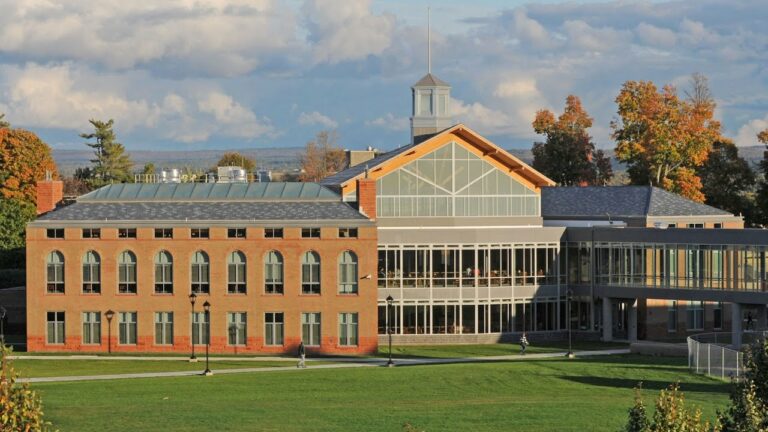
How to Choose the Right MBA PROGRAM?
Introduction
If you’re considering an MBA, you’re in good company. An MBA has long been one of the most popular graduate degrees in the U.S. Since 2010- 2011*, the MBA has been the No. 1 choice of students who continue their education beyond a bachelor’s degree. Even more important, the vast majority of graduates of MBA programs credit the degree with advancing their careers and boosting their incomes.
Much of the MBA’s value lies in the skills and perspectives the degree program provides. Strong MBA programs combine the fundamentals with an emphasis on strategic thinking, teamwork, flexibility, and leadership. That combination can pay dividends—in personal and financial fulfillment— throughout your career.
 A Multitude of Options
Today’s MBA students have more options than ever before. Like Miller, students can attend a full-time, residential program and earn an MBA in as few as nine months. Or, students can work full time and choose from a variety of part-time options:
A Multitude of Options
Today’s MBA students have more options than ever before. Like Miller, students can attend a full-time, residential program and earn an MBA in as few as nine months. Or, students can work full time and choose from a variety of part-time options:
 Clarkson’s MBA
Clarkson University offers a variety of MBA and certificate options to meet the needs of
today’s students and working professionals.
• An accelerated, full-time, residential MBA program on-site at the Potsdam, N.Y.,
campus. Classes begin in August. Students can earn their MBA in as little as
nine months, depending on their business background.
• Dual-degree options:
MBA / Engineering
MBA / Data Analytics
MBA / Environmental Politics and Governance
• A hybrid MBA program that offers online courses anywhere as well as on-site
evening classes at the Capital Region Campus in Schenectady, N.Y. Students
can complete the program full time or part time. They also have the option of
attending all classes on-site, taking all courses online or choosing an on-site,
online combination. Students can complete the program in as little as 18 to 24
months or on an extended schedule, if they prefer.
• Advanced certificates in:
Accounting (on-site: Potsdam)
Business Fundamentals (online, hybrid, on-site: Capital Region)
Environmental Management (onsite: Potsdam)
Global Supply Chain Management (online, on-site: Potsdam)
Healthcare Management (hybrid, onsite: Capital Region
Human Resource Management (hybrid, onsite: Capital Region)
Innovation and New Venture Management (onsite: Potsdam)
Management and Leadership (hybrid, onsite: Capital Region)
Clarkson’s program has been named “A Top 50 Best Value Online MBA.” — Value Colleges
Clarkson’s MBA programs are accredited by the Association to Advance Collegiate Schools of Business (AACSB International).
Clarkson’s MBA
Clarkson University offers a variety of MBA and certificate options to meet the needs of
today’s students and working professionals.
• An accelerated, full-time, residential MBA program on-site at the Potsdam, N.Y.,
campus. Classes begin in August. Students can earn their MBA in as little as
nine months, depending on their business background.
• Dual-degree options:
MBA / Engineering
MBA / Data Analytics
MBA / Environmental Politics and Governance
• A hybrid MBA program that offers online courses anywhere as well as on-site
evening classes at the Capital Region Campus in Schenectady, N.Y. Students
can complete the program full time or part time. They also have the option of
attending all classes on-site, taking all courses online or choosing an on-site,
online combination. Students can complete the program in as little as 18 to 24
months or on an extended schedule, if they prefer.
• Advanced certificates in:
Accounting (on-site: Potsdam)
Business Fundamentals (online, hybrid, on-site: Capital Region)
Environmental Management (onsite: Potsdam)
Global Supply Chain Management (online, on-site: Potsdam)
Healthcare Management (hybrid, onsite: Capital Region
Human Resource Management (hybrid, onsite: Capital Region)
Innovation and New Venture Management (onsite: Potsdam)
Management and Leadership (hybrid, onsite: Capital Region)
Clarkson’s program has been named “A Top 50 Best Value Online MBA.” — Value Colleges
Clarkson’s MBA programs are accredited by the Association to Advance Collegiate Schools of Business (AACSB International).
Seventy-five percent of business school alumni say their degree provided opportunities for faster career advancement. Eighty-two percent say their degree increased their earnings power. — 2017 Alumni Perspectives Survey Graduate Management Admission CouncilSignificant ROI MBA students come from a variety of disciplines and professional situations. Some have bachelor’s degrees in business administration, and others haven’t taken a single business class. Some enroll in an MBA program immediately after earning an undergraduate degree. Others work full or part-time and are looking to advance professionally, change careers or launch their own businesses. Almost without exception, they view the MBA as an investment in their future. In many cases, that investment starts paying dividends soon after the program is completed—with job offers at significantly higher salaries than those paid to graduates who do not have an MBA.
A Multitude of Options
Today’s MBA students have more options than ever before. Like Miller, students can attend a full-time, residential program and earn an MBA in as few as nine months. Or, students can work full time and choose from a variety of part-time options:
- On-site evening or weekend-only programs.
- Online courses, available anytime, anywhere.
- Hybrid on-site/online programs, which combine the convenience of online classes with opportunities for in-person interaction with faculty and peers.
Clarkson’s MBA
Clarkson University offers a variety of MBA and certificate options to meet the needs of
today’s students and working professionals.
• An accelerated, full-time, residential MBA program on-site at the Potsdam, N.Y.,
campus. Classes begin in August. Students can earn their MBA in as little as
nine months, depending on their business background.
• Dual-degree options:
MBA / Engineering
MBA / Data Analytics
MBA / Environmental Politics and Governance
• A hybrid MBA program that offers online courses anywhere as well as on-site
evening classes at the Capital Region Campus in Schenectady, N.Y. Students
can complete the program full time or part time. They also have the option of
attending all classes on-site, taking all courses online or choosing an on-site,
online combination. Students can complete the program in as little as 18 to 24
months or on an extended schedule, if they prefer.
• Advanced certificates in:
Accounting (on-site: Potsdam)
Business Fundamentals (online, hybrid, on-site: Capital Region)
Environmental Management (onsite: Potsdam)
Global Supply Chain Management (online, on-site: Potsdam)
Healthcare Management (hybrid, onsite: Capital Region
Human Resource Management (hybrid, onsite: Capital Region)
Innovation and New Venture Management (onsite: Potsdam)
Management and Leadership (hybrid, onsite: Capital Region)
Clarkson’s program has been named “A Top 50 Best Value Online MBA.” — Value Colleges
Clarkson’s MBA programs are accredited by the Association to Advance Collegiate Schools of Business (AACSB International).
Almost three-quarters (74 percent) of graduate business majors lead to “six-figure median mid-career salaries.” — PayScale 2016 College Salary Report
[Book Review+Quotes] The Barstool MBA
![[Book Review+Quotes] The Barstool MBA](https://mbagateway.com/wp-content/uploads/2022/01/The-Barstool-MBA.jpg "[Book Review+Quotes] The Barstool MBA")
Introduction
What can working in a bar teach you about launching a successful startup? The answer – as bar owner Dan Maccarone and best-selling author Bob Sullivan reveal in The Barstool MBA – is just about everything.
In February 2009, Dan Maccarone, a digital product design executive who works with some of the world’s top brands, walked through the doors of what would be his new bar, Destination, in Manhattan’s East Village. The overwhelming stale-beer smell, ruined floor, and “Happy New Year 2008” banners that hung from the walls were the least of his worries. He had just six weeks and a budget of $150,000 to turn the place into the neighborhood’s new favorite hang-out – and start turning a profit.
For Maccarone, the experience of building out Destination was an unlikely crash course in conceiving, launching, and running a startup. From hiring the right staff to keeping the lights on, from getting patrons through the door to keeping them on their stools, Maccarone saw that the lessons he was learning day in and day out in the bar could be applied broadly to the challenges many of his clients on the digital product side faced when trying to get their businesses off the ground and keep them alive.
To tell this story, Maccarone teamed up with best-selling author Bob Sullivan, whose side-gig as a musician sends him to bars around the country. They spent two years interviewing dozens of bar owners, managers, bartenders, and industry insiders to uncover the secret wisdom behind running a successful bar and what it can teach us about business. With strategies and a-ha insights that can be applied to any new venture, The Barstool MBA is a delightfully unconventional and surprisingly practical resource for anyone weighing the cost of business school versus jumping right in.
The Barstool MBA Quotes
No noteworthy quotes have been found in the book
Buy The Barstool MBA on Amazon
Online MBA vs. On-Campus – What Suits You?

Tremendous advancement in technology has resulted in a two a new subdivision in MBA programs. One is Offline Campus program and another is the new era is online program type. An Online MBA program is now a more viable alternative to an on-campus course. Improvements in learning technology, greater access to career services and alumni networks have made the digital degree more appealing. In some ways, the online format could be better than the campus course, as students enjoy more flexibility in when, where and how they learn.
But there are pros and cons to each type of program, which suit different kinds of applicants. How do you choose which format is right for you? There are many aspects like flexibility, social aspects, networking and other opportunities which makes one better than other in some cases and other better the first at some points.
Online MBA vs. On-Campus MBA: Flexibility
When it comes to flexibility , undoubtedly Online MBA scores an extra point. Online MBAs allow students to earn a highly revered degree from virtually anywhere in the world. “The program is identical to our campus program, so students can experience the same rigor and faculty as a campus student without having to live in Pittsburgh,” for example, says Cindy McCauley, executive director of the Online Hybrid MBA at the Tepper School of Business in the US.
Online MBAs break all the limitations and widens the boundaries of opportunities. One need not to leave his job or have to shift to a different place to study from his /her favourite institution.
Many Online MBA programs also now offer the same level of career support as their campus counterparts. Classes include a weekly cohort meeting via video conferencing software that can be accessed globally. Participants also come together online twice per week in the evening for 75 minutes. And offline components (video lectures and assignments) can be completed whenever they fit into a student’s busy schedule.
Also, technology has closed the gap . Professors and students are able to interact in a better manner rather than in offline classes. With the help of technology each and every movement of a student is monitored, how attentive is he? or how good a student’s response was? All the factors are analyzed and a report is also generated.
A student might be missed in offline lectures but cannot in Online lectures. Despite spending most of their time online and at a distance, students form tight-knit relationships because they move together in a lock-step cohort through the program.
They complete their work in learning groups and learn to build relationships, even if they originally come from different backgrounds. They look forward to seeing each when they come to campus and continue these relationships after they graduate.
Many business schools are moving in this direction, offering opportunities for online students to come to campus to bond with their classmates.
Online MBA vs. On-Campus MBA: Social aspects, networking opportunities
Could Online MBAs lack some of the social aspects of campus courses, and the networking opportunities that are vital to the MBA experience?
One may think that Off-Campus will offer great opportunities in terms of socialising and building a worth network. No doubt in offline course one gets opportunity to get social meet new people. Also, one has more chances of making his/her own contacts.
Students develop meaningful relationships with their cohort in ways that are different than the full-time student experience. Despite spending most of their time online and at a distance, students form tight-knit relationships because they move together in a lockstep cohort through the program.
They complete their work in learning groups and learn to build relationships, even if they originally come from different backgrounds. They look forward to seeing each when they come to campus and continue these relationships after they graduate.
Online courses offer students substantial interaction opportunities, from participating in case discussions during live sessions, to completing integrative group assignments for classes, and connecting with highly-available faculty members through Zoom or Skype. One may miss a real back to school life which act as an add on flavour.
Ultimately, the online format is better for those who need more flexibility in their studies — providing the added benefit of not sacrificing a salary to get a campus MBA. But increasingly, the distinction between online and offline learning is being blurred.
A Short Guide to MBA Rankings

Getting an MBA is an investment in your future as well as in your earning potential. It is important to choose the right school for your goals as well as the program that you are looking for. Here are the top schools for the MBA program.
1.Stanford Graduate School of Business: This is a full-time two-year program that will fundamentally transform what you understand about business. The program ensures that you learn the skills that you are going to need while expanding your current knowledge. The school is the ‘Ivy League Standard’ of schools in the tech and business world in the USA. A Stanford MBA will earn about 215k following their degree as opposed to their 92k rate prior. Some of the biggest influencers and thought leaders in the tech world have come through this program.
2.Insead: This is one of the best schools out there for consulting. Over 40% of the students who have an MBA from Insead will find a job in consulting upon graduation. The tuition is 130,000 for the program and it is two years to complete.
3.University of Pennsylvania: Wharton: The most respected school in the USA according to Forbes is the Wharton School of Business. This program is two years, on-site, and offers a large degree of options in terms of focus and specialization. The acceptance rate is only 9%, that is because of the degree and the name. The average pre-MBA salary for a graduate is 82k while 5 years after, the average salary is 225k. There is large net gain that an MBA from this program brings.
- London Business School: This program is truly revolutionary in concept. Instead of having to attend classes daily, you have the option to attend classes on opposite weekends on Friday and Saturday. The program is also quite affordable compared to some of the other options at 114,000 USD. The campus is in London, UK.
- Harvard Business School: The fact that Harvard is at the top of the list should be no surprise. One thing that may surprise you, however, is that the cost of attending is only 106,800, which is more affordable than many of the other schools. Harvard has been working over the past years to bring in more tech, more diversity, and change that is revolutionizing its program and its students.
- University of Chicago: This is a full-time program that will help you to meet your goals in a revolutionary way. The cost of the degree is very affordable at 72,000 USD and the tuition includes something completely revolutionary, health insurance. You will have the freedom to explore your questions and your academic success with faculty supporting you every step of the way.
- Kellog-Hkust Business School: The costs for this program is 106, 782. According to some resources this is the number one program in the world. The program will net the average graduate with a 66% increase in salary and the average salary of 507, 492 USD. The tuition is all inclusive and covers the cost of books which is separate in all the other programs. The tuition also covers the cost of room of board. There are also many international locations so you can attend regardless of where you are from. Campuses include Hong Kong, China; Beijing, China; Miami, USA; Toronto, Canada; Chicago, USA; Tel Aviv, Israel; and Dusseldorf, Germany.
- Trium Global EMBA: One thing that is so unique about this school is that you get the benefit of three schools for the price of one. Trium, the Latin word for three is a combination of NYU Stern, LSE, and HEC Paris. The tuition does carry a heavy price tag at 185, 150 USD. The program has a more seasoned professional class. The average student is 40 and very continental. The average EMBA student has 16 years of experience as well as comes from one of 28 different countries. This is a great program for those looking for an international focus. The average salary is 342,970 for graduates as well.
- UCLA Anderson School of Business: The Anderson School is a full-time two-year MBA program. It is known for churning out some of the most reputable names in business to large corporations like Google and Goldman Sachs. The program is 97,110 USD but offers a huge alumni network to help support and assist following graduation.
- MIT Sloan: This is a full-time program that will challenge you to learn. This is a program that will challenge you and help you transform the future. According to the MIT stats, 97% of students who complete their MBA will graduate with full time offers. From that percentage the average salary is 135k right out the door. The cost for the MBA is 77,168 which will not be extremely painful for your wallet either.
3 best MBA programs you can avail in 2021

Three best MBA programs in 2021
First question, what is an MBA? Master of Business Administration, also termed as an MBA, is an advancement in BBA’s technical, administrative, and leadership skills (Bachelors in Business Administration).
Today, MBA is considered as one of the most authentic and impactful higher degrees in terms of business studies across the globe. That’s why we have selected the top 3 MBA programs across the globe that you can avail of in 2021. Keeping in mind the current situation of the pandemic, the list is based on QS global ranking and program availability for the year 2021.
Stanford Graduate School of Business, MBA
Situated in beautiful California, Stanford University is a global name with a reputation that most universities and IVY league competitors can dream about. The Stanford Graduate School of Business (GSB) was founded in 1925, making Stanford GSB one of the fundamental institutes for higher business studies in the country.
Crowned as the No 1 in QS global ranking for MBA, the Stanford GSB has the most prestigious faculty across the globe with three Noble Prize laureates, two John Bates Clark Award winners, and several members of the American Academy of the Arts and Sciences. With an average acceptance rate of 7.1%, Stanford GSB has undoubtedly the ability to select the finest of talent worldwide.
The Wharton School, MBA
With multiple campuses in both Philadelphia and California, The Warton School has undoubtedly made its mark in the field of higher business education across the world. The signature Warton full-time MBA is a 20-month program, featured with a 3.5-month summer internship. The main focus of The Wharton MBA is entrepreneurship and related skills.
Proudly residing at NO 2 in QS global ranking for MBA, The Warton School has an average of 18% acceptance with a 94% employment ratio, demonstrating the quality of education this school offers. Moreover, in terms of scholarships and international collaborations, The Wharton School is genuinely exceptional.
MIT Sloan School of Management
The prestigious MIT Sloan School of Management, situated in the beautiful Cambridge, USA, has a grace and significance of its own. Especially in the field of higher business studies. With two full-time MBA programs, the Sloan School of Management focuses on skills like planning and public policy, making Sloan’s MBA program quite exceptional.
Ranked at No 3 in QS global ranking for MBA, the Sloan School of Management holds the firmest numbers in full-time international students and employment ratio for graduates. On average, 41% of students enrolled in the degree are from international lineages and a 96% employment percentage, which is quite impressive.
Conclusion
With all that being said and elaborated, it’s now your decision to choose what suits you the best. Across the globe, talent is what top universities demand with a wild dream of changing the world. Hold on to that dream, and you will be just fine along the way.